
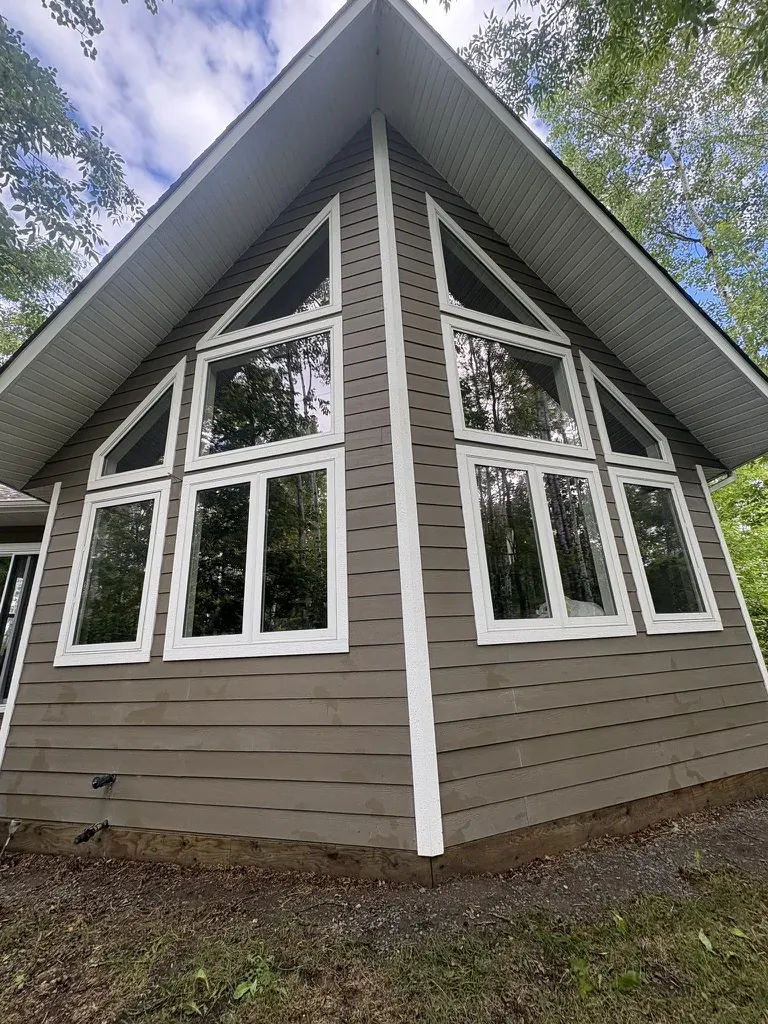
Soft washing uses a lower-pressure application and a surface-appropriate cleaning process. It can be a better option where high pressure could disturb paint, finishes, joints, or delicate building details.
What soft washing actually is
The method inverts the usual pressure washing logic. Instead of force, it relies on chemistry: a cleaning solution, typically a diluted sodium hypochlorite mix with a surfactant, is applied at under 500 PSI, low enough that the spray would not harm your hand. The solution dwells on the surface for 5–15 minutes, killing algae, mildew, and bacteria at the root rather than shaving off their top layer. Then everything rinses away at pressures comparable to heavy rain. Compare that with the 2,500–3,500 PSI commonly used on bare concrete and the difference in mechanical stress is obvious. The full comparison is laid out in the difference between pressure washing and soft washing.
Because the growth is killed rather than scraped, soft-washed surfaces typically stay clean longer than blasted ones. Algae mowed off by pressure alone regrows from its roots within months; treated growth has to recolonize from scratch, which often stretches the clean result to 12–24 months on walls in typical South Florida exposure.
Which surfaces call for soft washing?
Painted stucco and block, the dominant wall materials in South Florida, top the list, along with vinyl and fiber-cement siding, soffits and fascia, screen enclosures, wood fences, and roofs of every type. What these have in common is a failure mode under pressure: paint strips, stucco scars, screen tears, wood furs, and roof granules shed. Concrete driveways and stone flatwork remain the domain of conventional pressure washing; the point is not that one method is better, but that each surface has a correct one.
Paint age, coating condition, vegetation, runoff, and nearby metals are reviewed before a method is chosen. A test area may be appropriate. The estimate identifies the intended surfaces and any areas excluded because of condition or access. Chalky, oxidized paint, common on homes that have gone 10+ years without repainting, deserves special caution, which is why is soft washing safe for painted surfaces is worth reading before scheduling.
Why South Florida properties need it more than most
The growth that soft washing targets is a climate product. Humidity and the June-through-October storm cycle keep shaded walls damp for days at a time, and Gloeocapsa magma, the algae behind black roof streaks, thrives on exactly that. North-facing elevations, walls behind hedges, and anything under tree canopy green up first. Sprinkler overspray keeps wall bases wet on a schedule, and well-water systems add rust staining on top. Salt air near the coast films over paint and accelerates fixture corrosion. High pressure would beat all of this off the surface temporarily, at the cost of the surface itself; soft washing removes it without the collateral damage, which is why it has become the standard method for building exteriors across the trade.
What a soft washing visit looks like
The visit starts with protection: landscaping under the work area is pre-wetted so plant tissue does not absorb solution, and it gets rinsed during and after the wash. Windows, doors, and fresh-air intakes are checked closed. The solution is applied from the bottom of each wall section upward to avoid streaking, allowed to dwell, then rinsed top-down. Metals, awnings, and oxidized surfaces get either a gentler mix or an exclusion, noted in the scope. A typical single-story home takes 2–4 hours including plant rinse-down; larger or two-story homes run longer. Results are visible immediately on most staining, though some deeply set growth keeps fading for days after treatment as the dead material weathers off. Preparation for homeowners is light: close windows, move furniture and potted plants off the walls, turn sprinklers off for the day, keep pets inside, and unlock gates.
What goes wrong when soft washing is done carelessly
The risks are chemical rather than mechanical. Solution mixed too hot for the surface can lighten paint or leave streaks where it dried in the sun. Plants that never got pre-wetted or rinsed show burn within days. Runoff allowed to sheet across an unrinsed pool deck or into a pond is a real problem, not a cosmetic one. Overspray drifting onto cars or patio cushions bleaches spots. None of this is inherent to the method; all of it comes from rushing the protection steps that make the method safe. A written scope that names the mix strength considerations, the excluded surfaces, and the rinse plan is the sign the job is being taken seriously.
What it typically costs
In the current South Florida market, soft washing generally prices out at $0.15 to $0.35 per square foot of wall surface, so a modest one-story home often totals a few hundred dollars while a large two-story runs meaningfully more. Those are prevailing market rates rather than anything specific to one company. Story count, heavy staining that needs a second application, tight access behind pool cages, and whether the visit is a one-time job or part of recurring care all move the final figure. A property-specific scope starts with an estimate request; the pressure washing cost guide covers related pricing in more depth.
Soft washing pairs naturally with house washing, which applies the same method to the whole envelope, and with roof washing, where low pressure is not a preference but a requirement. Gulfshine offers it across 61 published South Florida cities, Monday through Sunday, 8:00 AM to 8:00 PM.
Who this service is for
- Residential homeowners
- Commercial properties
- HOAs and property managers
Surfaces and scope
- Painted exteriors
- Selected siding
- Soffits
- Delicate exterior finishes
Related questions
- What is the difference between pressure washing and soft washing? ; Pressure washing relies more on mechanical force; soft washing uses lower pressure with a surface-appropriate treatment process.
- Is soft washing safe for painted surfaces? ; It can be appropriate, but paint age, adhesion, oxidation, chemistry, dwell time, and rinsing still require assessment.
Soft Washing is available across our South Florida service areas where the property and surfaces are a fit, mention it when you request an estimate.
Last updated .