
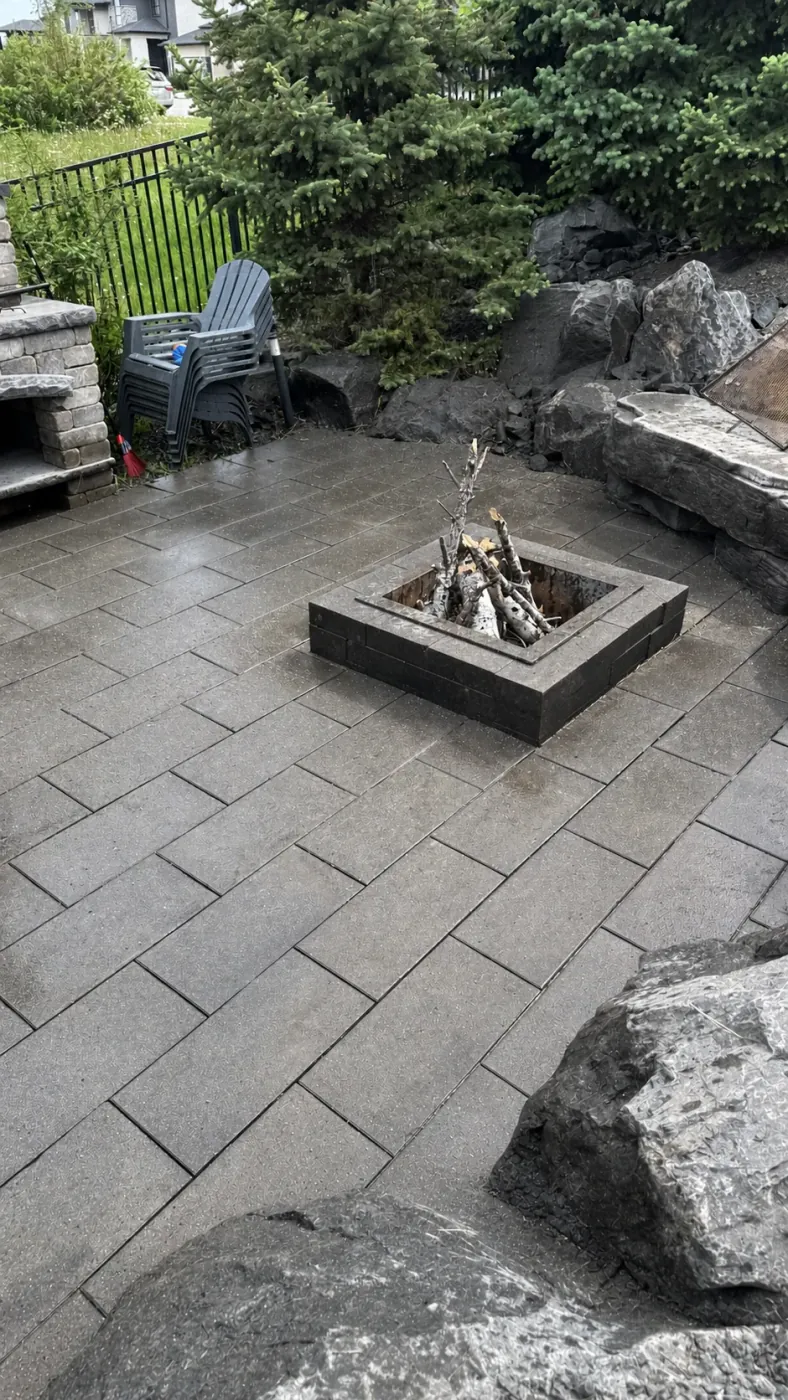
Paver sealing lives or dies on preparation. Existing coatings, efflorescence, joint stability, drainage, weather, and moisture can affect both the process and the finish.
A plan built on condition
The first step is to inspect the surface and identify any cleaning, drying, repair, or old-sealer concerns. The written scope should state the product type, preparation steps, exclusions, and cure-time guidance before scheduling.
That inspection is not a formality. An old sealer that has whitened or peeled usually has to be stripped before anything new goes down, because new sealer over failing sealer fails with it. Efflorescence, the white mineral haze that migrates out of concrete pavers, has to be cleaned or allowed to finish blooming first, or it gets locked under the coating as a permanent cloud. Sunken or shifting pavers should be reset before sealing, not after. A surface that fails inspection is not rejected; it just gets a preparation plan first.
What the sealing process typically includes
A full job runs in stages across 1–2 days depending on weather and drying. First the surface is deep-cleaned, typically at the lower pressures pavers require, since aggressive washing blasts out joint sand and scars the paver face, the problem covered in is pressure washing safe for pavers. Weeds and organic growth in the joints are removed, and stains like rust or oil are treated separately because sealer magnifies whatever is left underneath it.
Then the surface must dry, usually 24–48 hours, because sealing over trapped moisture is the number-1 cause of the white, blushed finish that ruins jobs. Joint sand is topped up and swept in; many scopes use polymeric or joint-stabilizing product so the sand locks in place under the sealer. Finally the sealer goes on in 1–2 even coats, and the surface needs to stay dry and untouched while it cures: typically 4–24 hours before foot traffic and 24–72 hours before vehicles, with the exact window depending on the product and the weather.
How long does paver sealing last in South Florida?
Industry-typical lifespan is 2–5 years, and South Florida conditions push toward the shorter end of that range. UV exposure here is relentless, summer storm cycles keep surfaces wet for months, pool decks add chlorinated splash-out, and sprinklers on well water lay down rust staining that ages a finish fast. Driveways wear faster than patios because tires grind grit into the coating. No fixed lifespan is promised without assessing use, exposure, and prior treatments; the variables are unpacked in how long does paver sealing last. The practical signs of a sealer at end of life are fading color enhancement, water no longer beading, and joints growing weeds again.
Why seal pavers at all?
Unsealed concrete pavers in this climate fade under UV, absorb oil and rust stains, grow algae in every shaded joint, and slowly lose their joint sand to rain and blowers. A sealer slows all 4 processes: it blocks UV fading, makes spills sit on top long enough to clean, starves growth of the porous surface it wants, and, with stabilizing products, hardens the joints against washout. Appearance is the visible benefit, most sealers deepen the paver color the way water does when the surface is wet, but the maintenance case is what makes the spend rational. Sealed surfaces also clean up faster at their next scheduled pressure washing, because grime sits on the coating instead of in the pores.
Weather, timing, and preparing for the visit
Scheduling revolves around dry windows. The surface needs to be rain-free from the final cleaning through cure, which in the June-to-October storm season means watching the forecast and sometimes moving a date; a good sealing job is never raced against an afternoon storm. The dry season, roughly November through May, is the easier window, but summer jobs are routine when planned around the weather.
Homeowner preparation is straightforward: move vehicles off the surface for the full clean-dry-seal-cure span, which can mean 2–4 days of street parking for a driveway. Turn sprinklers off from the day before sealing until cure is complete, since 1 irrigation cycle on curing sealer can blush the finish. Move furniture and planters off patios and pool decks, and plan pool use around the deck being out of service. Pets and foot traffic stay off until the walk-on time in the scope.
What it typically costs
Market pricing for clean-and-seal paver work in South Florida mostly falls between $1 and $2 per square foot, which puts a common 600-square-foot driveway in the several-hundred-dollar range and larger pool decks well above it. Treat those as going rates across the trade, not a commitment. Stripping a failed old sealer, resetting sunken pavers, heavy rust or efflorescence treatment, and premium two-coat products are the usual reasons a job lands high in or beyond the band. Because condition drives so much of the number, an estimate scoped to your surface is the reliable path; the pressure washing cost guide covers the cleaning side of the equation.
Where sealing may fit
Eligible driveways, patios, walkways, and pool surrounds can be evaluated. Not every paver surface is ready to seal immediately, and no fixed lifespan is promised without assessing use, exposure, and prior treatments. For HOA and managed properties, entrance features and shared walkways are common candidates, and sealing phases can be folded into a broader exterior plan. Gulfshine serves 61 published South Florida cities across Miami-Dade, Broward, and Palm Beach counties; the full list is on the service area page.
Who this service is for
- Residential homeowners
- HOAs and property managers
Surfaces and scope
- Driveways
- Walkways
- Patios
- Pool decks
Related questions
- Is pressure washing safe for pavers? ; It can be when pressure, distance, equipment, joint condition, and existing sealer are suited to the surface.
- How long does paver sealing last? ; A properly prepared and sealed surface can last for several years, depending on traffic, drainage, sun, and the product used.
Paver Sealing is available across our South Florida service areas where the property and surfaces are a fit, mention it when you request an estimate.
Last updated .