
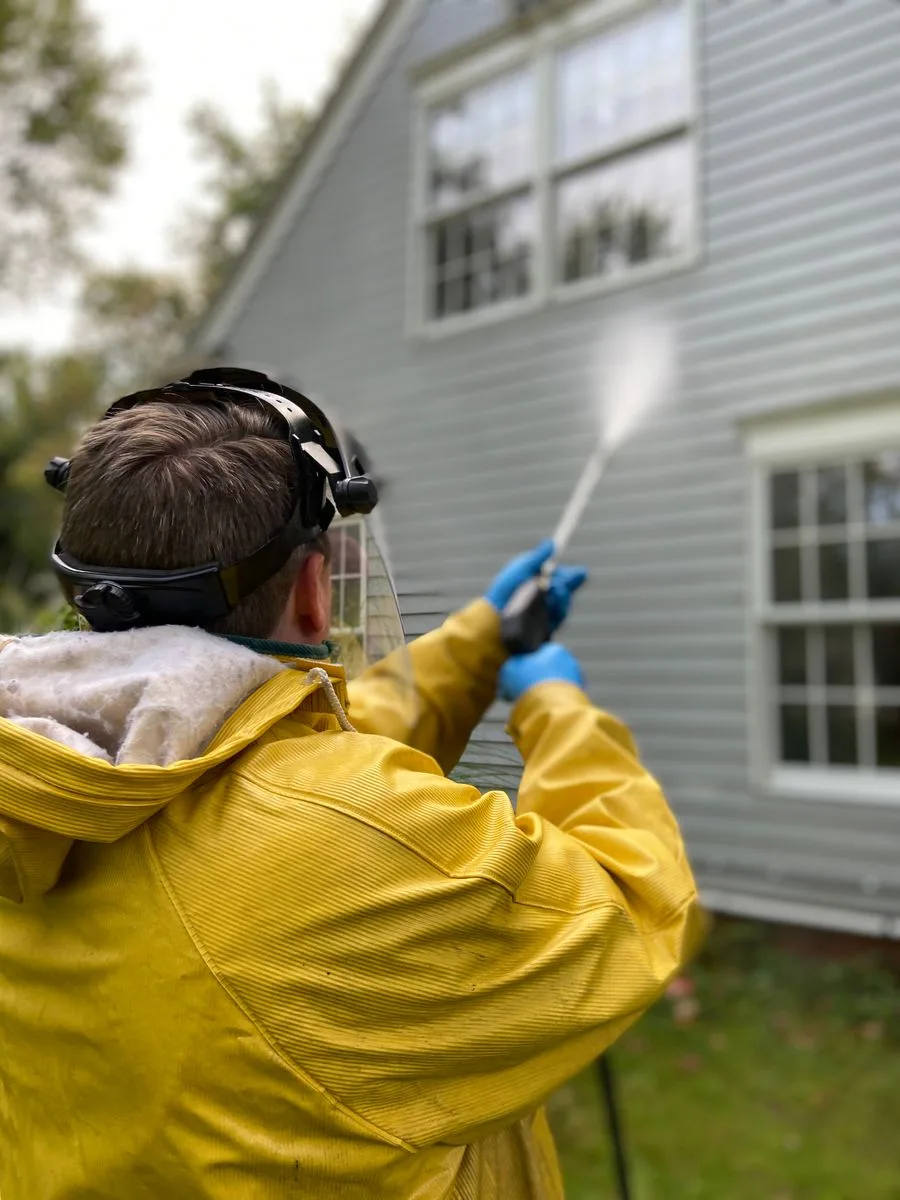
An exterior house wash starts with the building envelope, not with a single pressure setting. Gulfshine reviews siding or stucco condition, painted details, openings, fixtures, landscaping, drainage, and access before recommending a method.
What a house wash typically includes
A standard scope covers the exterior walls on the agreed elevations, plus soffits, fascia, gutters’ exterior faces, and entry details like columns and door surrounds. Window frames get rinsed as part of the wall wash, though glass detailing is a separate trade; window cleaning can be quoted separately when a final glass detail is desired, and many homeowners pair the two so the window cleaning happens after the walls are done and rinsed.
The estimate should list the elevations and features included, areas that need special handling, and any pre-existing damage or maintenance issue that limits cleaning. That last part matters more than it sounds: hairline stucco cracks, failing paint, gaps at penetrations, and brittle screen material all change what a responsible wash can promise. Flagging them first is the difference between a maintenance service and a liability.
How the wash is actually done
On South Florida homes, most of which are painted stucco or block, the right method is a soft wash: a detergent solution applied at under 500 PSI, allowed to dwell for 5–15 minutes while it breaks down algae, mildew, and grime, then rinsed at pressures closer to heavy rain than a cutting jet. The chemistry does the cleaning; the water only carries it away. High pressure on stucco drives water into cracks, blows out patch repairs, and strips paint in blotches, which is why the method question is settled before anyone pulls a trigger. The distinction is laid out in the difference between pressure washing and soft washing.
Landscaping and runoff get as much planning as the walls. Beds beneath the work area are pre-wetted, rinsed during the wash, and rinsed again after, because detergent left concentrated on foliage is how plants get burned. Downspouts, drainage paths, and pool proximity are accounted for so the rinse water goes where it should.
Why do South Florida homes green up so quickly?
Humidity, shade, and the summer storm cycle. From roughly June through October, daily rain keeps north-facing walls and anything under tree canopy damp long enough for algae and mildew to take hold, showing up as green film low on the walls and black speckling under roof lines. Sprinkler overspray, especially on well water, adds orange rust staining at wall bases near the heads. Salt air near the coast leaves a haze on painted surfaces and accelerates corrosion on fixtures. The practical result is that most homes here benefit from a wash every 12–24 months, with shaded, heavily landscaped, or coastal homes trending toward every 12 months. Homes being photographed for sale are their own case; realtors often schedule a wash 1–2 weeks before listing photos.
Preparing your home for the visit
Close all windows and doors fully, including the ones you never open. Move patio furniture, wall art, and potted plants away from the walls being washed. Turn off sprinklers for the day and unlock side gates. Point out anything delicate ahead of time: aging paint, loose trim, a screen door that does not latch, exterior outlets without covers, or a spot where water has found its way inside before. Pets should be indoors during the wash. No water or power hookup beyond a standard exterior spigot is usually required, and a typical single-story wash takes 2–4 hours from setup to final rinse.
What goes wrong when a house wash is done badly
The failure modes are well known. High pressure on stucco leaves fan-shaped scars and forces water behind the wall, where it shows up later as interior staining. Detergent applied in full sun without enough rinse dries into streaks on paint and kills the hedge under the window. Water blasted upward into soffit vents soaks attic insulation. Oxidized paint, common on older homes, can wipe away unevenly under careless pressure, leaving the wall looking worse than before the wash. These outcomes and how the right method avoids them are covered in can pressure washing damage a house.
What it typically costs
A whole-home exterior wash in this region typically books between $250 and $600 at prevailing market rates, based on what companies across Miami-Dade, Broward, and Palm Beach commonly charge for a single-family soft wash. Two-story homes, large footprints, years of accumulated staining, and difficult access around pool enclosures or dense landscaping account for most of the spread, and homes on a 12-to-24-month cycle tend to stay near the low end because there is simply less growth to remove. None of this substitutes for seeing the property. Request an estimate for a scoped figure, and see how much pressure washing costs for the wider pricing picture.
Pairing a house wash with other exterior work
A house wash is usually the anchor of a larger exterior refresh. Roof washing removes the black algae streaks above the walls so a clean house does not sit under a stained roof, and doing the roof first means its runoff is rinsed away during the house wash rather than after it. Driveway and walkway cleaning finishes the ground level. Sequencing all of it in 1 visit, roof, walls, glass, flatwork, is more efficient than booking each trade separately, and Gulfshine serves 61 published cities across Miami-Dade, Broward, and Palm Beach counties, Monday through Sunday, 8:00 AM to 8:00 PM.
Who this service is for
- Residential homeowners
- Realtors
Surfaces and scope
- Exterior walls
- Soffits
- Fascia
- Entry details
Related questions
- Can pressure washing damage a house? ; Yes. Excess pressure or the wrong angle, distance, tip, or treatment can damage finishes and force water where it should not go.
- What is the difference between pressure washing and soft washing? ; Pressure washing relies more on mechanical force; soft washing uses lower pressure with a surface-appropriate treatment process.
House Washing is available across our South Florida service areas where the property and surfaces are a fit, mention it when you request an estimate.
Last updated .